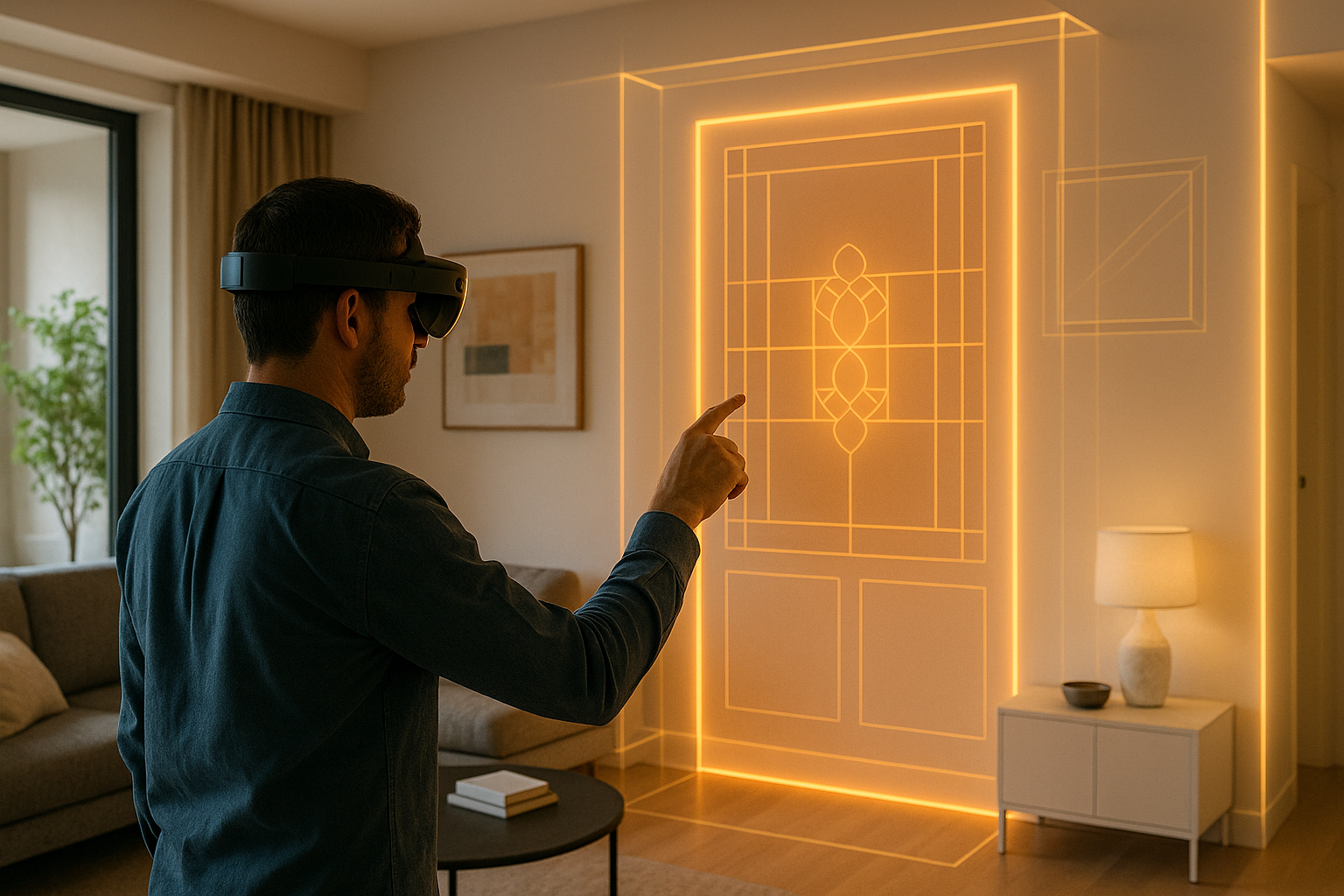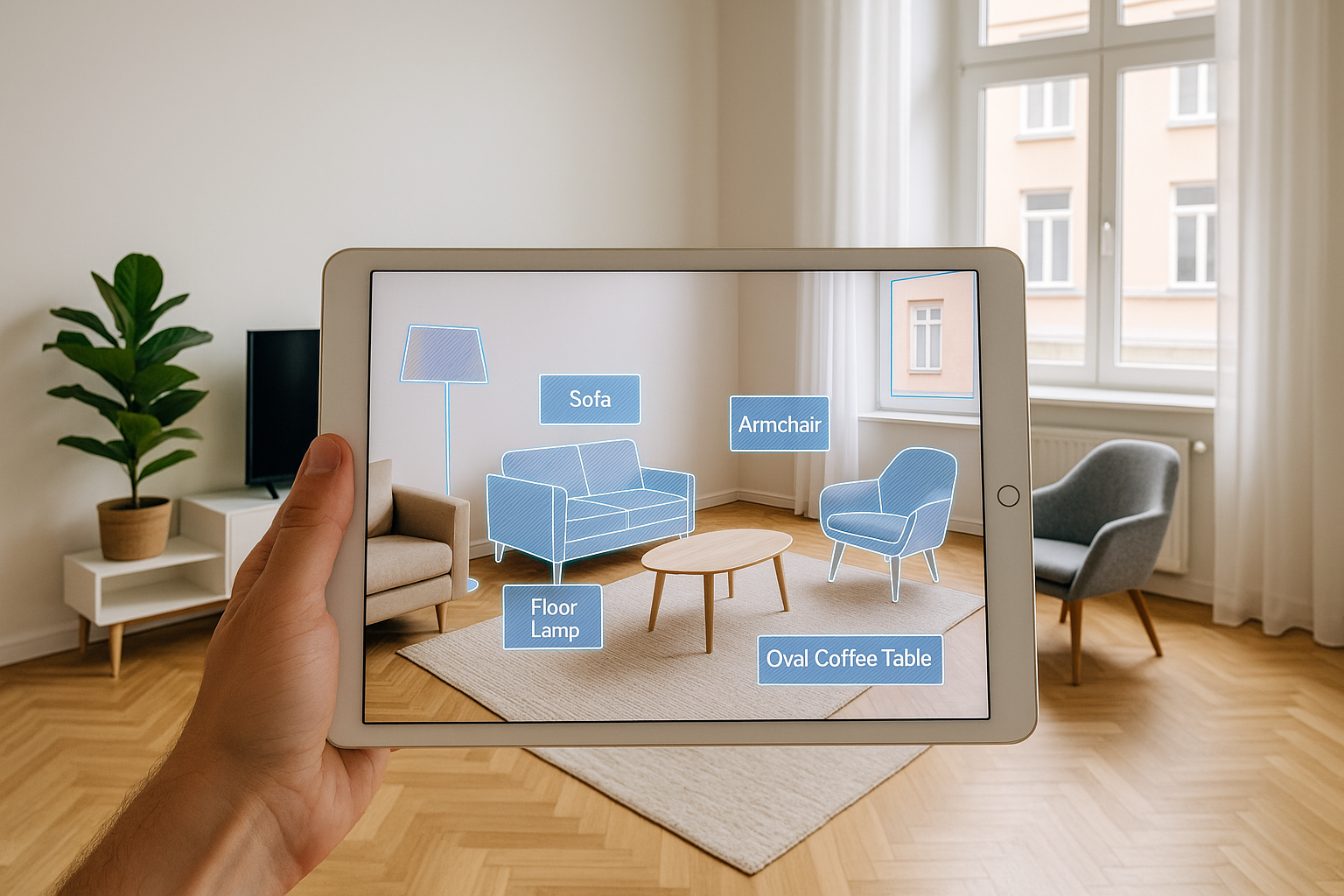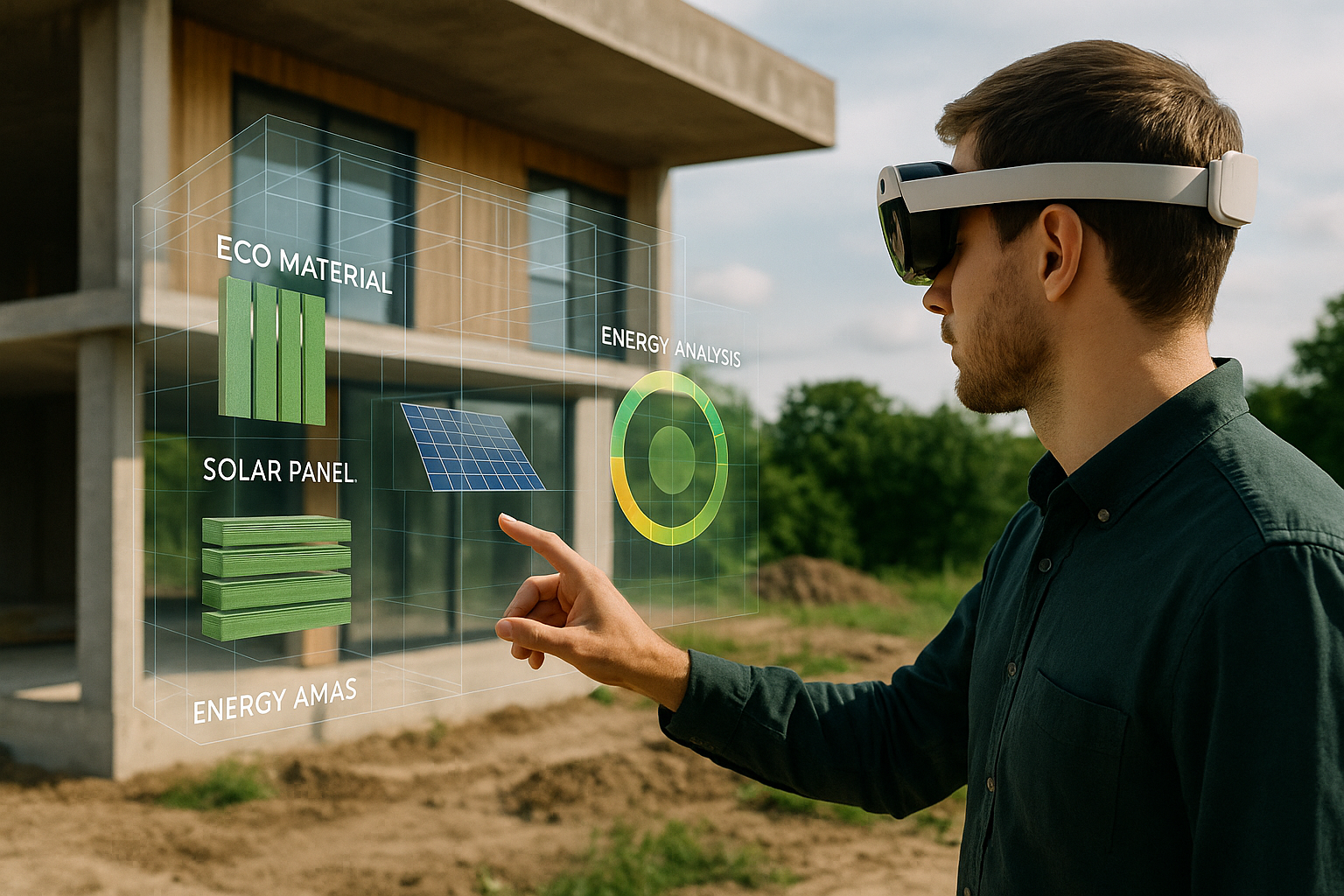
AR and sustainability are no longer separate innovations—they’re converging to create a new architectural paradigm. In 2025, augmented reality is becoming a vital instrument in green design, enabling architects to visualize resource efficiency, material impact, and energy performance before the first brick is laid.
Introduction
The concept of sustainable AR architecture 2025 marks the intersection of two transformative forces: environmental responsibility and immersive technology. Architects are now leveraging AR to project digital environmental data directly onto real-world job sites. This fusion allows teams to evaluate solar exposure, airflow, and material lifecycles visually, making sustainability tangible and actionable.
1. Why AR matters for sustainable design
Traditional sustainability assessment happens late in the design process—often through 2D charts or abstract models. AR changes this dynamic. Designers can now walk through a digital-physical hybrid of the project and see where thermal losses occur or how daylight penetrates at different times of day.
- Real-time simulation: Architects use AR overlays to see how shading or glass type affects energy consumption.
- Material transparency: Each AR-tagged material displays embodied carbon, recyclability, and supplier footprint data.
- Team alignment: Engineers and clients visualize sustainability metrics on-site, improving communication and decisions.
2. Key innovations in sustainable AR architecture 2025
Several trends define this year’s breakthroughs:
2.1 AR-driven material optimization
AR platforms linked to BIM models now display the ecological footprint of each material. Designers can swap options instantly—seeing how using bamboo instead of steel affects weight, cost, and emissions.
2.2 Real-world energy modeling
Modern AR applications overlay live solar and wind data onto building envelopes. With IoT sensors feeding environmental data, architects observe thermal behavior in context, aligning aesthetic choices with performance results.
2.3 AR in adaptive reuse and retrofit
Instead of demolition, many 2025 projects prioritize reuse. AR visualization helps architects map existing structures and simulate energy savings achieved through insulation, glazing upgrades, or orientation changes before physical work begins.
2.4 Lifecycle visualization
AR dashboards now integrate with LCA (Life Cycle Assessment) tools, presenting visual summaries of carbon impact. Stakeholders can “see” the difference between low-impact and high-impact materials in the same space, facilitating greener choices.
3. Global leaders applying AR to sustainability
Firms such as Foster + Partners, BIG, and Gensler report major efficiency gains from AR integration. Their projects demonstrate reductions in design time and measurable drops in carbon emissions from early-stage optimization. Universities—including ETH Zurich and MIT—have established AR-Sustainability Labs focused on predictive simulation for climate-positive design.
4. Benefits for architects and clients
- Transparency: Clients understand sustainability goals visually, not via spreadsheets.
- Speed: Material and energy scenarios are tested live during design meetings.
- Cost savings: Fewer late-stage revisions reduce both financial and carbon waste.
- Compliance: Easier demonstration of adherence to green-building standards (LEED, BREEAM, EDGE).
5. Regional adoption and Armenia’s potential
In Armenia and neighboring regions, adopting sustainable AR architecture 2025 can redefine construction quality. Local studios can leverage AR to balance heritage preservation with green innovation. Visualizing solar efficiency on Yerevan façades or geothermal integration in mountain resorts could accelerate sustainable transformation across the Caucasus.
6. Challenges ahead
- Hardware barriers: AR headsets remain costly and sometimes uncomfortable for long use.
- Data integration: Aligning BIM, IoT, and environmental data into one AR interface demands robust APIs.
- Training: Architects need new skills in environmental analysis and XR interaction.
7. Future outlook — toward AR-enabled net-zero design
By 2026, AR platforms will integrate predictive AI, automatically suggesting greener configurations as designers move through a space. Combined with real-time building performance feedback, this will make carbon-neutral design the default, not the exception.
Quick Facts
- AR adoption in sustainable projects is growing at >40 % year-over-year (2024 → 2025).
- AR-based daylight analysis improves accuracy of energy simulations by up to 30 %.
- Top architecture schools now include AR-sustainability modules in their curricula.
Conclusion
Augmented reality is redefining sustainability in architecture—from concept to construction. As the global building sector faces unprecedented environmental accountability, AR provides the visual intelligence to design responsibly. Firms embracing sustainable AR architecture 2025 are proving that immersive technology and ecological stewardship can build the same future: efficient, elegant, and enduring.
👉 Explore Our AR Sustainability Toolkit Today
© 2025 AUGmentecture. All rights reserved.