What’s new in 2025 in AR interior design trends? In an era where immersive technologies, sustainable materials and client-centric workflows converge, the world of interior architecture is undergoing a major shift. This article dives into how AR (augmented reality) is reshaping how architects design, how clients experience spaces, and how firms integrate these trends in practice.
Introduction
The focus on AR interior design trends 2025 reflects more than a passing tech fad — it signals a change in the way interiors are conceptualised, visualised and validated. As hybrid work and living patterns persist, clients demand greater involvement, faster iterations and sustainability credentials. At the same time, architects and designers are under pressure to adopt streamlined workflows and deliver immersive experiences. With that backdrop, the integration of AR is no longer optional—it’s a strategic differentiator.
1. Why AR is becoming central to interior architecture
Many of the top architecture-industry reports identify immersive technologies as a core trend for 2025. For example, the firm Vectorworks lists “Augmented and Virtual Reality” as one of the top trends shaping architecture in 2025. [oai_citation:0‡vectorworks.net](https://www.vectorworks.net/en-US/newsroom/future-architecture-trends?utm_source=chatgpt.com)
Here’s why this matters:
- Clients expect more than static renderings—they want spatial feel, lighting shifts, and interactive walkthroughs before decisions are locked.
- Design teams benefit from AR by accelerating feedback loops: real-time adjustment, overlaying design options in situ, and reducing costly construction changes.
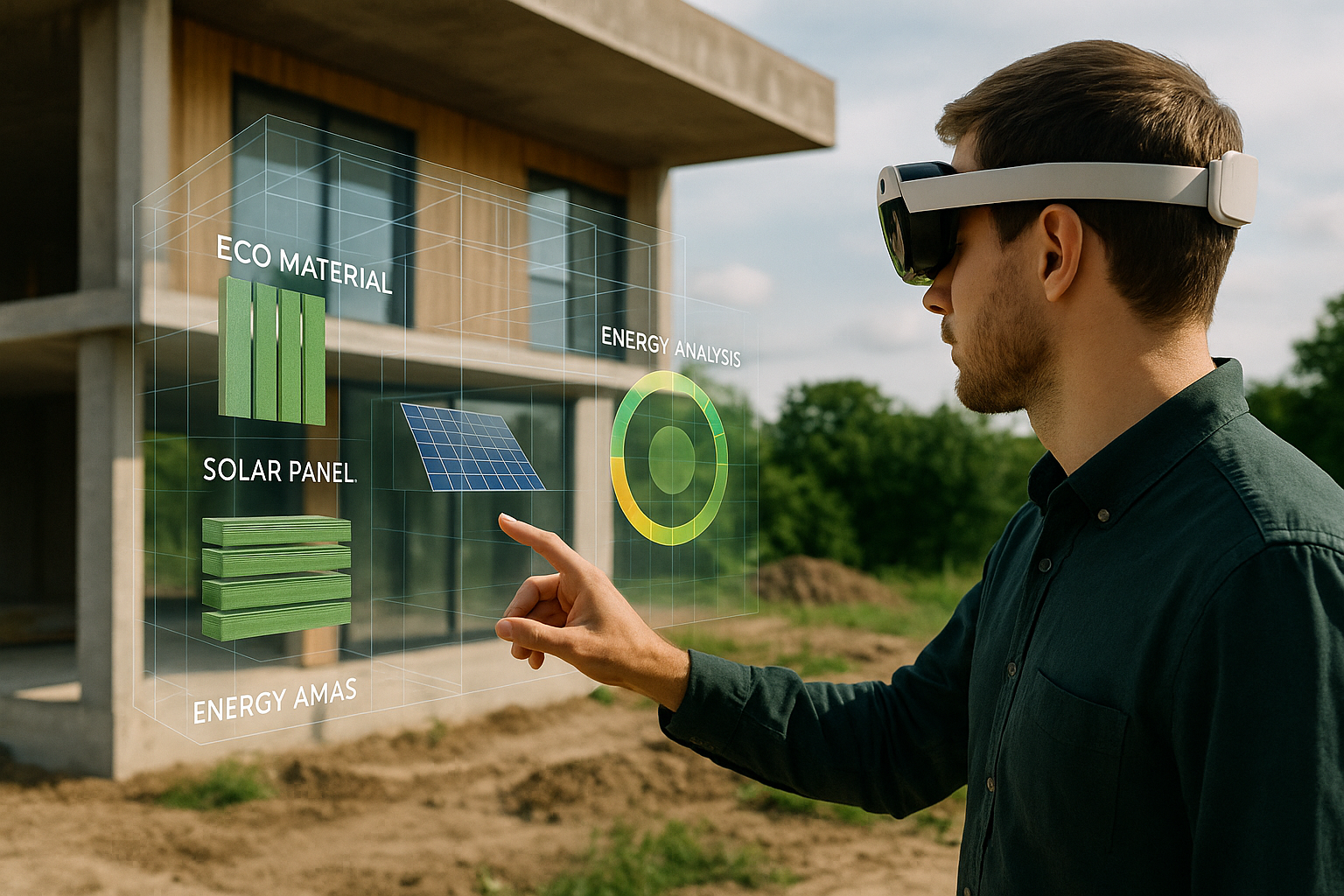
- Sustainability and performance targets demand verification early. AR enables simulation of natural light, material finishes and occupant experience in the real space.
2. The workflow shift: From CAD to immersive collaboration
The traditional sequence of sketches → 2D drawings → static 3D renders is being disrupted. In 2025, the emerging workflow for interior architecture often includes:
- Concept modelling in parametric/BIM environments (where generative tools propose options). [oai_citation:1‡Novatr](https://www.novatr.com/blog/top-architectural-design-trends?utm_source=chatgpt.com)
- Import of model into AR-capable apps or headsets, overlaid in the real environment (e.g., the client’s existing space).
- Live collaboration: the designer and client both view and manipulate design elements in the physical room augmented with digital layers—change finishes, move furniture, test lighting, and immediately see impact.
- Feedback captured directly via AR sessions, fed back into the BIM/design model for fast iteration and sign-off.
This shift yields major benefits: quicker approvals, better design-client alignment, fewer surprises on-site, and reduced waste from reworks.
3. Key AR interior design trends to watch in 2025
Let’s look at the most significant trends within the “AR interior design” sphere:
3.1 Immersive client-experience as design decision point
3.2 AR-enabled sustainability validation
With interior architecture increasingly held to sustainability benchmarks—embodied carbon, occupant comfort, adaptive reuse—AR tools now incorporate performance overlays: daylight simulation, energy use of finishes, lifecycle data of materials. Firms that adopt this distinguish themselves by integrating sustainability early, not as an afterthought.
3.3 Hybrid spaces, modularity & smart integration
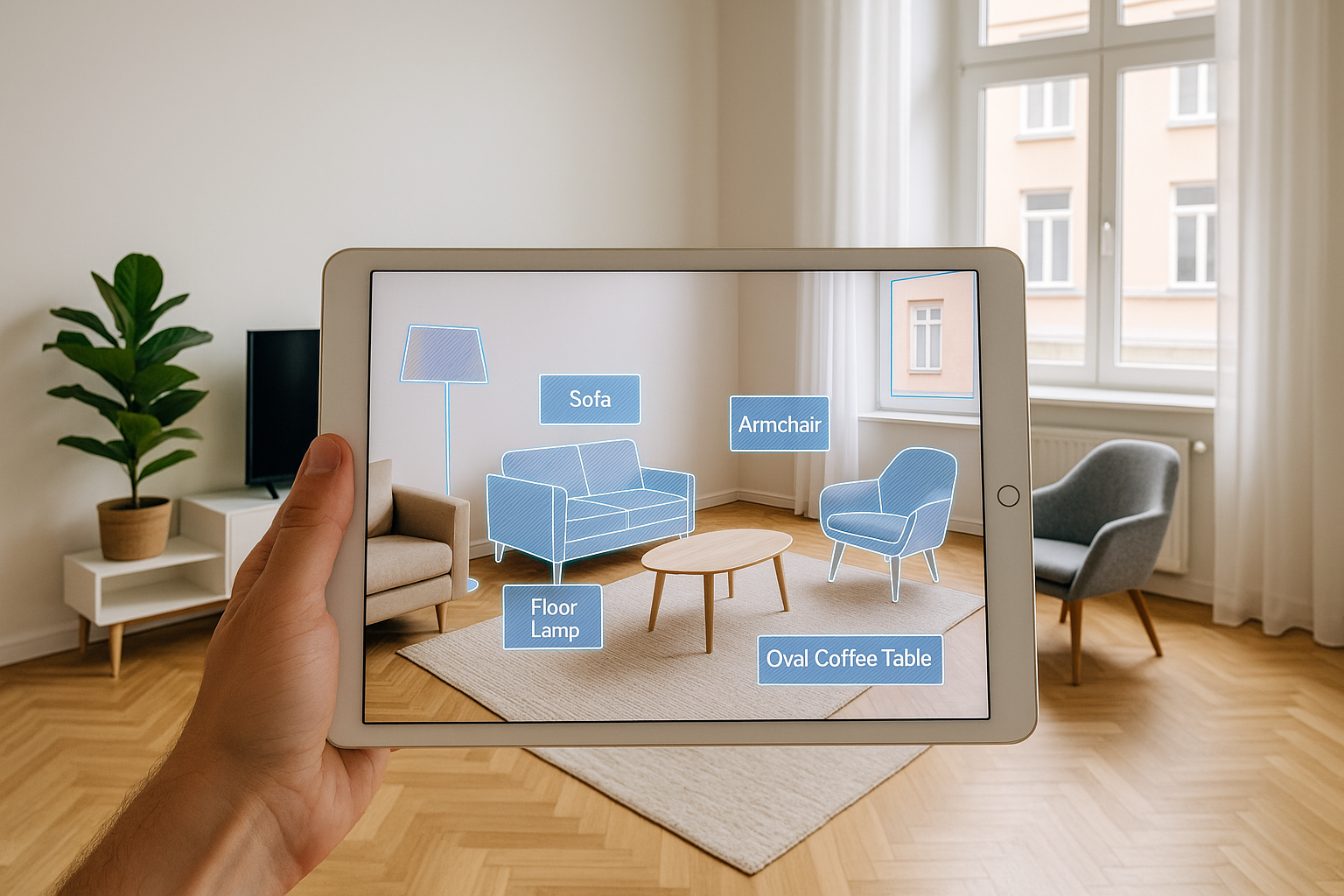
The rise of hybrid-work interiors (home + office) and flexible living demand modular furniture, adaptable zones, and smart integration (IoT, sensors). AR supports these by overlaying modular options in the existing environment, showing how furniture or partition systems can reconfigure quickly. Meanwhile, interior architects are combining parametric design logic—often used for façade or structural elements—into interiors so the configurations change in response to user or environmental data. [oai_citation:3‡Wikipedia](https://en.wikipedia.org/wiki/Parametricism?utm_source=chatgpt.com)
3.4 Real-time visualization & decision making
One of the catalysts for AR uptake is the blending of real-time rendering with AR workflows. The architectural visualization industry notes that real-time rendering, AI-driven updates and AR/VR are converging to create interactive design-and-review sessions. [oai_citation:4‡CYLIND](https://www.cylind.com/articles/architectural-rendering-trends?utm_source=chatgpt.com) For interior architecture, this means you could walk a mock-up, adjust lighting or finishes, and instantly see how it appears under different conditions—no long render queue.
3.5 Adaptive reuse & retrofit augmented by AR
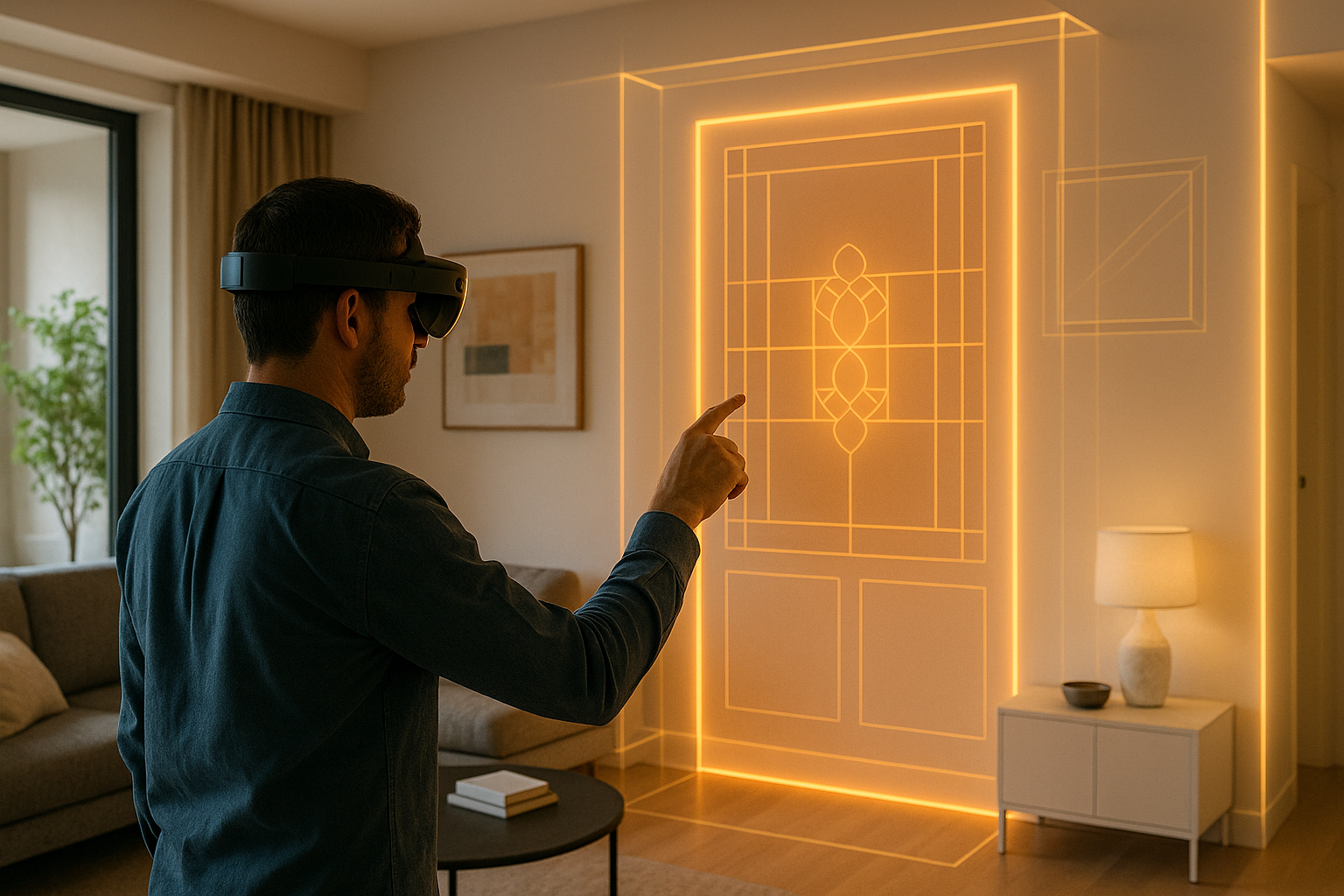
As urban interiors increasingly move into retrofit and adaptive reuse rather than new builds, AR plays a powerful role: overlaying proposed changes in existing spaces, visualising structural interventions, and allowing stakeholders to “see the future” within the old envelope. This aligns with the architecture trend of adaptive reuse for 2025. [oai_citation:5‡Novatr](https://www.novatr.com/blog/top-architectural-design-trends?utm_source=chatgpt.com)
4. Implementation: How architectural firms can integrate AR interior workflows
Here’s a practical roadmap for architecture/interior design firms looking to lead with AR:
- Step 1: Build AR-capable content early. Make sure your BIM/3D model is compatible with AR export formats and mobile/tablet/AR headset platforms.
- Step 2: Train client-facing teams. The shift isn’t pure tech—it’s behavioural. Designers and project managers must guide clients in an AR walk-through and interpret what they see.
- Step 3: Combine AR sessions with design sprints. Use short iterative sprints where AR is used weekly or bi-weekly for decision-making, not just at milestone hand-off. This keeps clients engaged and changes minimal.
- Step 4: Use AR for sustainability and performance validation. Overlay simulation data (daylight, energy, materials) so design decisions are evidence-based and transparent to clients and stakeholders. This builds authority and trust.
- Step 5: Maintain post-occupancy AR follow-through. The interior architecture process doesn’t stop at hand-over. Use AR to guide facility operations, furniture re-configurations or retrofits—this transforms your service model into ongoing engagement.
By embedding AR into these steps, a firm not only differentiates itself technologically but also shifts its value proposition: from design-only to immersive experience-and-outcome provider.
5. Benefits & challenges
Major benefits:
- Higher client satisfaction thanks to immersive alignment and fewer surprises on-site.
- Faster decision-making, fewer iterations and less waste (both time and material).
- Stronger positioning for sustainability credentials and performance-driven design.
- New revenue opportunities around post-occupancy services (reconfiguration, simulation updates, AR-enabled maintenance).
Key challenges:
- Initial investment in AR tools, modelling workflows and staff training.
- Ensuring AR content quality and performance (models must be lightweight, accurate, and intuitive to manipulate).
- Client adoption curve—some clients may experience technology fatigue or be resistant to change.
- Integration with legacy systems and ensuring the AR outputs tie back into your BIM / documentation workflows.
Quick Facts
- Trend: AR and VR are now listed as key architecture design drivers for 2025. [oai_citation:6‡vectorworks.net](https://www.vectorworks.net/en-US/newsroom/future-architecture-trends?utm_source=chatgpt.com)
- Interior architecture is shifting away from static render presentation to immersive, real-time walkthroughs.
- Sustainability and retrofit/adaptive reuse continue to dominate design mindsets—and AR helps visualise these early. [oai_citation:7‡Novatr](https://www.novatr.com/blog/top-architectural-design-trends?utm_source=chatgpt.com)
- Real-time rendering, cloud collaboration and AI-driven visualization are converging with AR workflows. [oai_citation:8‡CYLIND](https://www.cylind.com/articles/architectural-rendering-trends?utm_source=chatgpt.com)
6. What this means for Armenia & the regional market
For firms operating in Armenia or the South Caucasus region, the “AR interior design trends 2025” opportunity is especially relevant. Many workplaces and commercial interiors are being refitted to hybrid-use or co-working models, and clients are eager for visualisation tools that reduce risk and improve decision-making. Introducing AR-based walkthroughs, especially for retrofit projects or multi-use space design, can differentiate a firm, command higher fees and position it as forward-thinking.
Moreover, given the strong interest in sustainability and adaptive reuse across the region (where historic buildings are often being repurposed), AR can help clients see how a space can transition from old to new without losing character. This localised insight positions your firm as a value-added partner, not just a design vendor.
Conclusion
The rise of AR in interior architecture is not just a novelty—it is a reflection of deeper shifts: clients demanding immersive experience, sustainability becoming core to design, and architects needing to deliver faster, smarter and with less waste. By embracing the focus on AR interior design trends 2025, your practice can lead the curve, offer differentiated services, and build long-term client trust through immersive-driven workflows.
👉 Discover Our AR-Enabled Design Service Today
© 2025 AUGmentecture. All rights reserved.