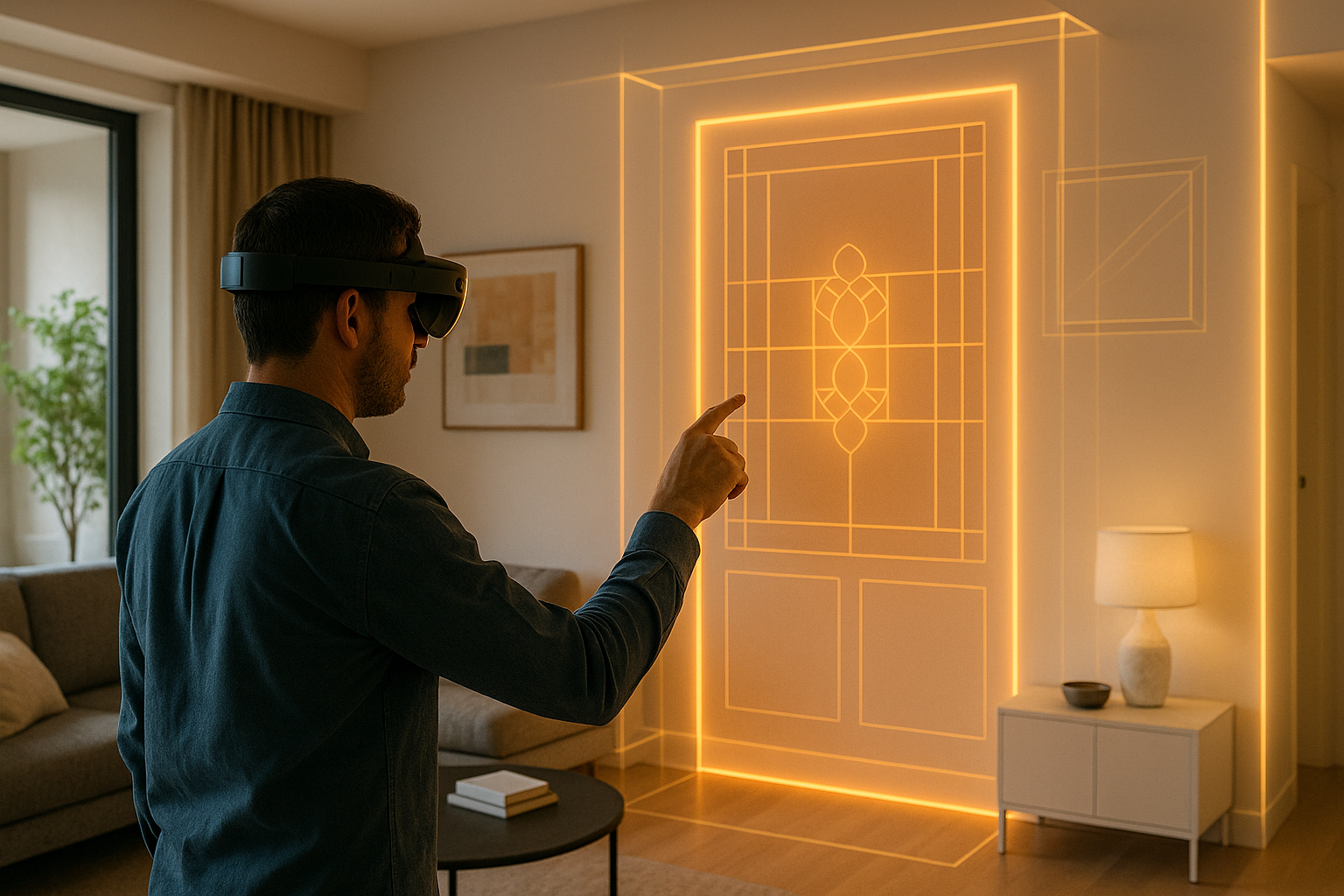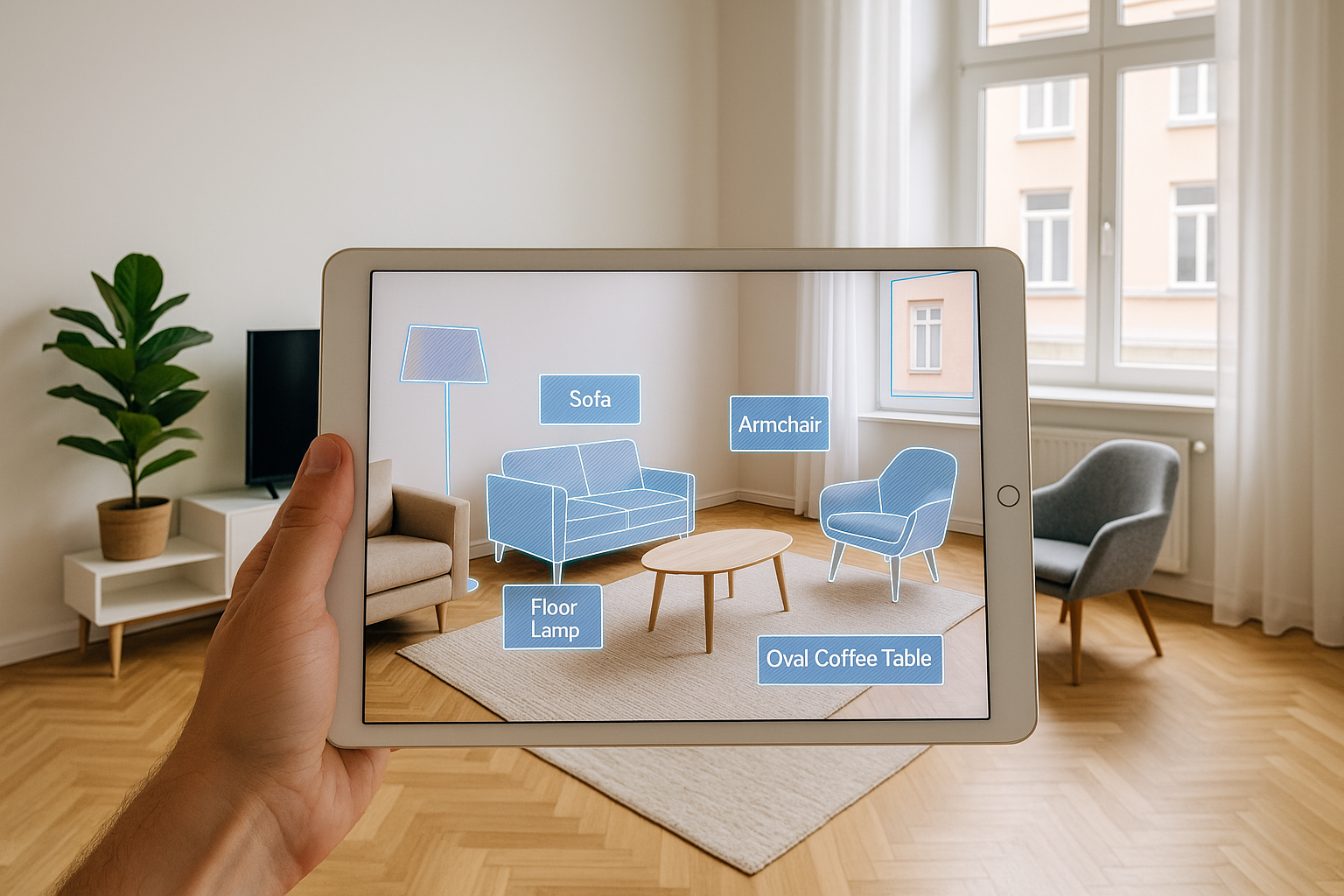
What’s new in AR this month? In September 2025, Siemens and NVIDIA unveiled their new AR-enabled industrial collaboration platform that allows engineers to visualize digital twins directly on factory floors. Meanwhile, Tesla’s Gigafactory announced the integration of AR-assisted quality control for production lines, using real-time overlay data to reduce human error. These innovations mark the next phase of Industry 4.0, where Augmented Reality (AR) connects humans, machines, and data into a seamless, intelligent ecosystem.
The Role of AR in Modern Manufacturing
Manufacturing is undergoing a fundamental transformation. Traditionally, factories relied on complex blueprints, manual processes, and disconnected systems. Today, AR serves as a bridge between human expertise and digital intelligence, turning every workstation into an interactive command center. Through AR glasses or tablets, workers can visualize schematics, receive instructions, and monitor equipment performance in real time—all without leaving their position on the assembly line.
How AR Drives Efficiency and Precision
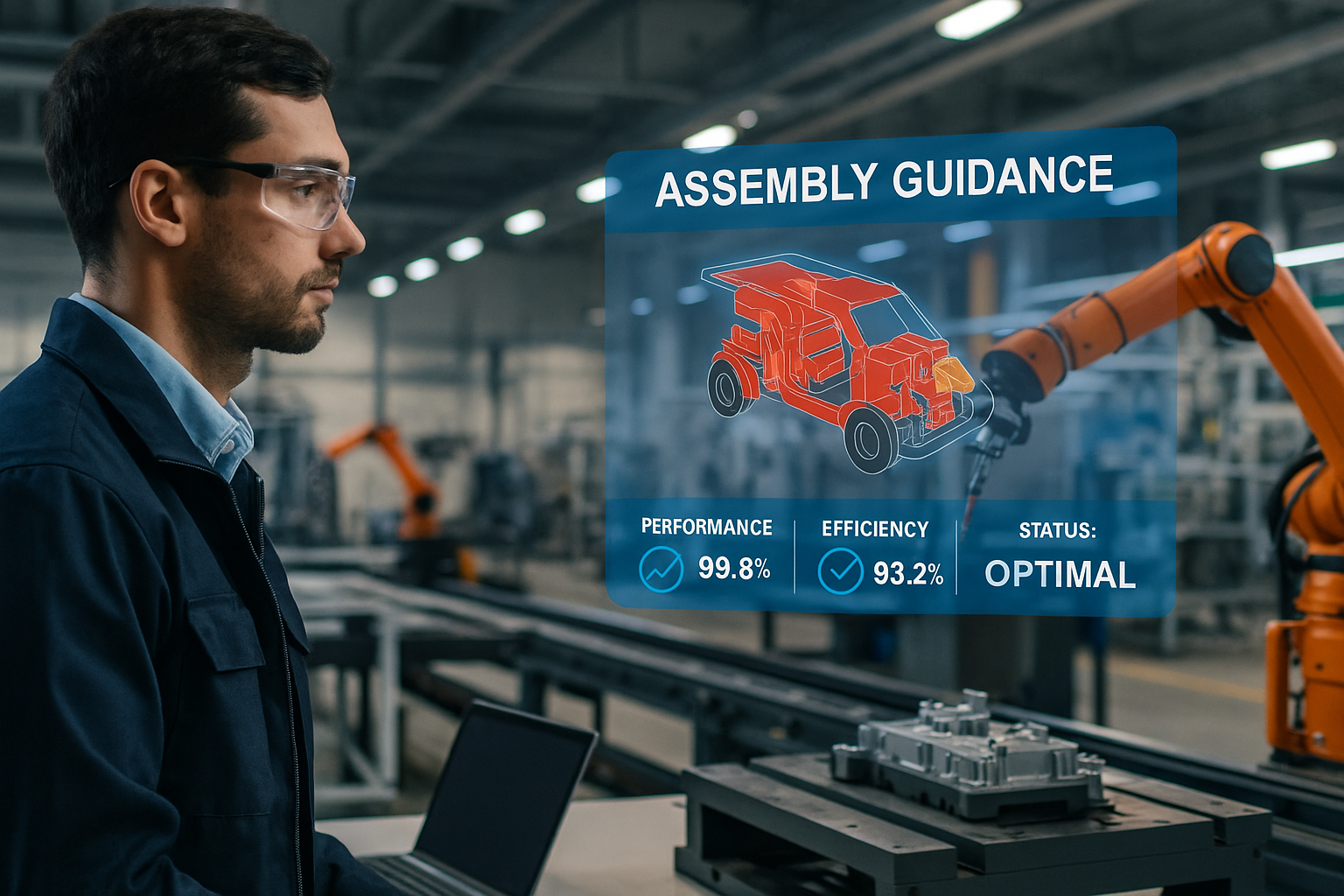
AR eliminates guesswork from manufacturing operations. By overlaying 3D models and sensor data directly onto real equipment, workers gain instant visual feedback on part placement, tool usage, or component alignment. This minimizes errors, reduces downtime, and enhances overall productivity.
Applications of AR in Smart Factories
- 1. Assembly Guidance: Workers can follow AR instructions projected directly onto components, reducing training time and ensuring every step meets quality standards.
- 2. Maintenance Visualization: Technicians wearing AR headsets can view the internal structure of machines, identify faulty parts, and receive AI-powered repair suggestions instantly.
- 3. Quality Control: AR systems highlight defects in real time by comparing live camera feeds with digital twin models, ensuring that deviations are corrected immediately.
- 4. Worker Training and Simulation: New employees can learn complex procedures in virtual AR environments that replicate real production scenarios safely and cost-effectively.
AR and Digital Twin Integration
One of AR’s most transformative contributions to manufacturing is its integration with digital twins—virtual replicas of machines or production systems. When linked with IoT sensors, AR allows operators to see live operational data, such as vibration levels, temperature, and maintenance schedules, overlaid directly on physical equipment. This visibility enables predictive maintenance, extending asset lifespan and minimizing unplanned downtime.
Human–Machine Collaboration in AR
AR empowers workers to collaborate with autonomous systems intuitively. Robots and humans now share visual communication cues through AR interfaces, improving synchronization and safety. For example, an autonomous robotic arm may project its next movement onto the factory floor, allowing workers to anticipate and adjust accordingly.
Case Studies
1. Boeing – AR for Aircraft Assembly
Boeing’s adoption of AR for wiring and assembly tasks reduced production time by 25% and improved accuracy by 90%. Technicians use AR glasses to visualize wiring routes, eliminating the need for paper diagrams.
2. Porsche – AR Remote Assistance
AR systems allow Porsche technicians to connect with remote experts through live visual feeds. Engineers guide on-site staff through complex repairs by drawing annotations directly into the worker’s field of view.
3. Siemens – Digital Factory Integration
Using AR-enhanced digital twins, Siemens factory operators can simulate workflow changes before implementation. This reduced reconfiguration time by 40% and improved energy efficiency across multiple sites.
Challenges in AR-Driven Manufacturing
- Hardware Costs: Industrial-grade AR devices remain expensive, though costs are decreasing annually.
- Data Security: Integrating AR with IoT and cloud systems requires robust encryption and strict access control.
- Skill Gap: Manufacturers must invest in workforce training to fully leverage AR systems.
- Integration Complexity: Legacy equipment and outdated software can hinder AR adoption without proper digital transformation.
Future Outlook: The Factory of the Future
By 2030, AR will be central to fully autonomous, self-optimizing manufacturing ecosystems. Factories will rely on AR-assisted robots that visualize workflows, predict supply shortages, and automatically adjust operations. AR combined with AI and 5G connectivity will enable real-time global production management, where digital twins and operators collaborate seamlessly across continents.
Key Takeaways
- AR revolutionizes manufacturing by merging physical production with real-time digital intelligence.
- Digital twins and AR create unprecedented transparency and control in factory operations.
- Human–machine collaboration is becoming safer, faster, and more efficient thanks to AR integration.
- The future of manufacturing will be defined by augmented intelligence and spatially aware systems.