What’s new in AR this month? In September 2025, Autodesk and Trimble announced the launch of AR-powered construction coordination tools, integrating digital twins directly into active project sites. Meanwhile, Skanska began using AR-based safety visualization software across its major infrastructure projects in Europe. These updates signal how Augmented Reality (AR) is redefining the global construction industry — making project planning, safety management, and collaboration more efficient than ever before.
The Role of AR in Construction Management
Construction management depends on precise coordination between architects, engineers, and site workers. AR bridges the digital and physical worlds by overlaying 3D BIM models, schedules, and performance data onto real-world job sites. This technology enables managers to detect design conflicts before they happen, track progress accurately, and maintain quality throughout the entire building lifecycle.
Applications of AR in Construction
1. Design Visualization and Coordination
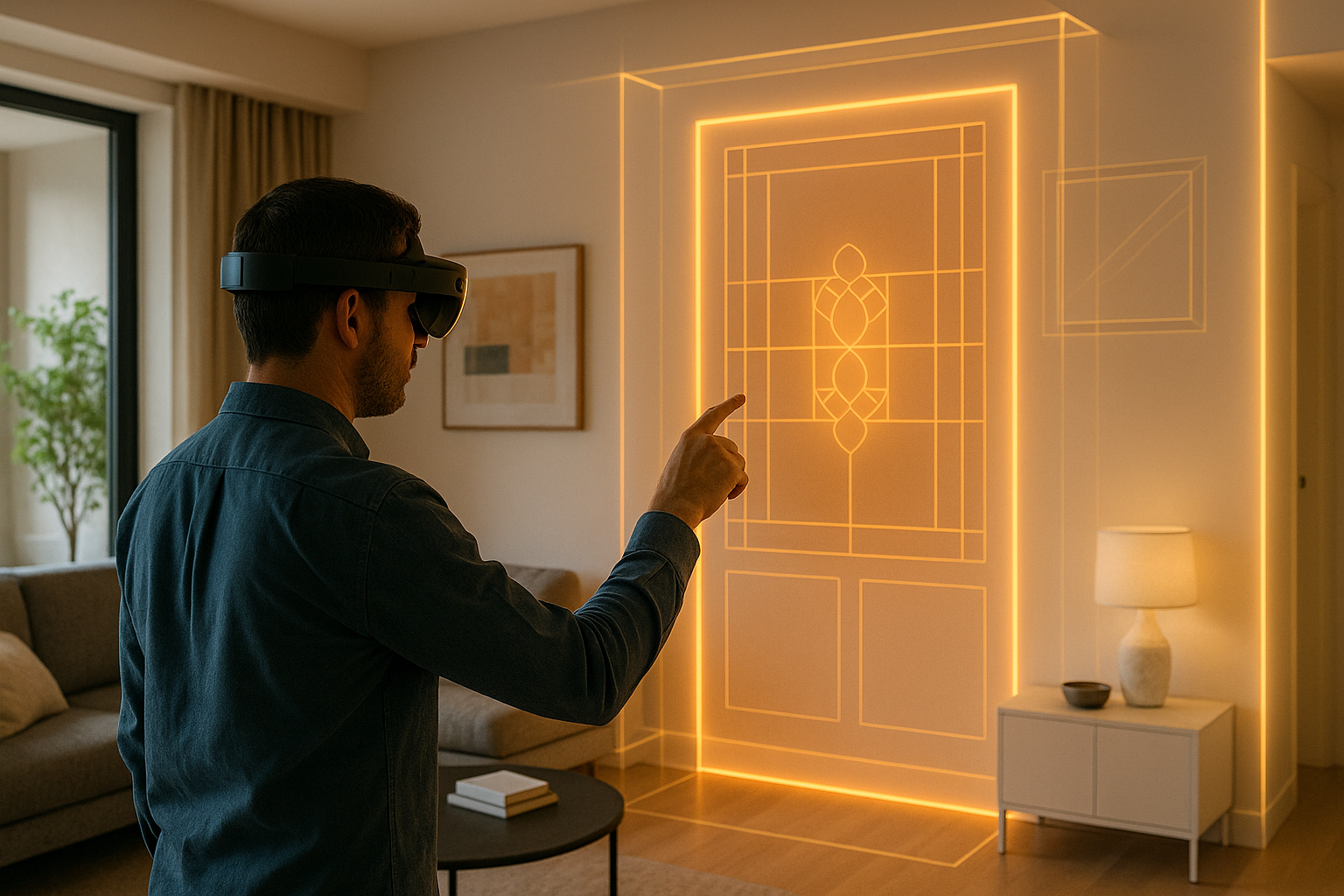
AR allows stakeholders to walk through virtual building designs at full scale before construction even begins. By viewing the 3D model overlaid on-site, project teams can validate spatial relationships, identify clashes, and refine layouts with minimal rework.
2. Site Progress Tracking
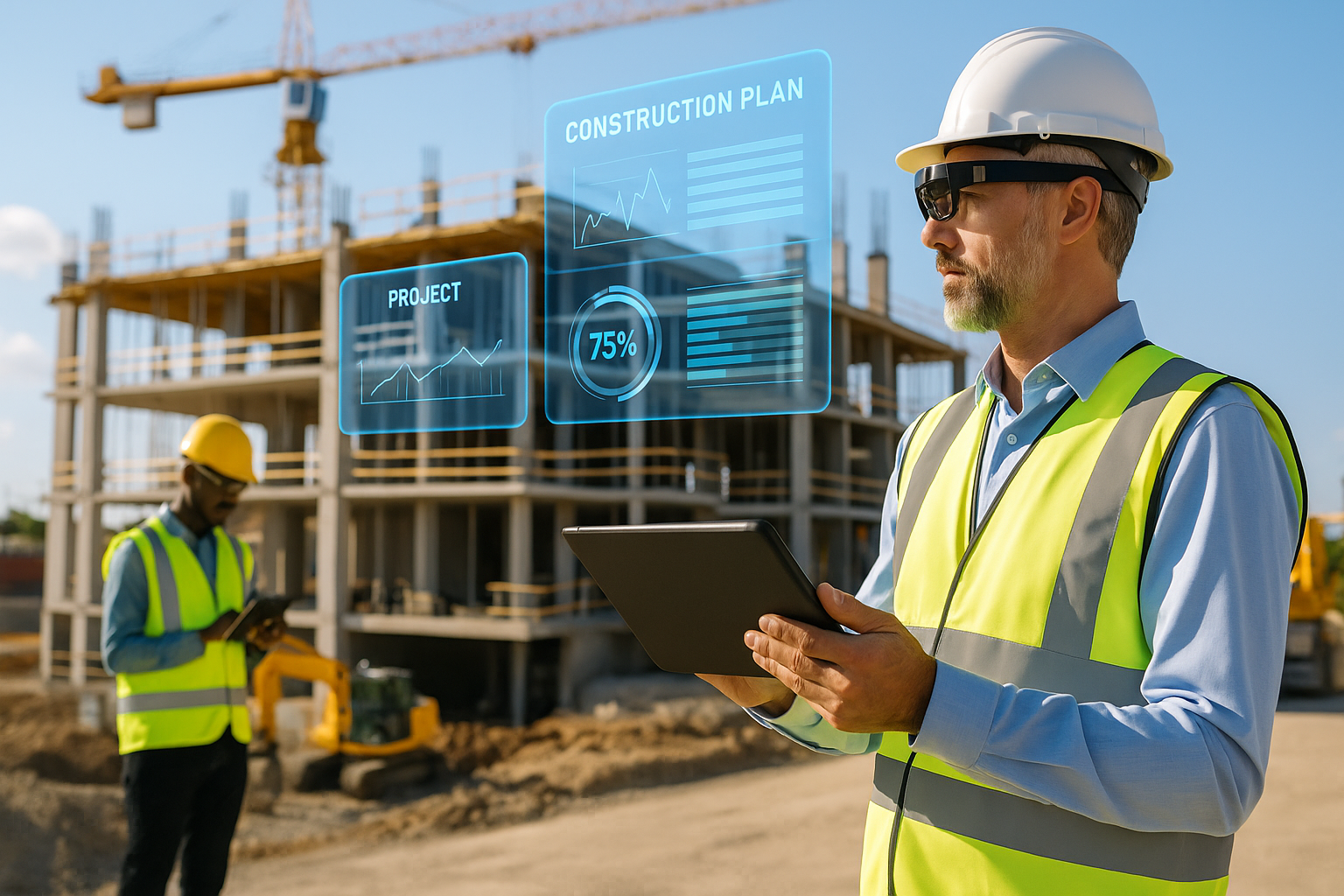
Using AR headsets or tablets, managers can compare the real-time build with digital plans. Deviations in alignment, elevation, or material installation are detected instantly, enabling quicker issue resolution and accurate reporting for stakeholders.
3. Safety and Risk Management
AR visualizes hazard zones, crane movement paths, and exclusion areas directly on the job site. Workers receive live alerts about unsafe conditions or restricted zones, which has proven to reduce accidents in pilot programs by up to 40%.
4. Remote Collaboration and Inspection
Engineers and architects can remotely view the same AR environment as on-site teams, marking annotations and design adjustments in real time. This eliminates unnecessary travel and allows expert oversight even from other countries.
Case Studies
1. Skanska – Smart Construction Safety Visualization
Skanska’s AR-based safety system overlays dynamic hazard maps onto live camera feeds. Workers wearing AR glasses can visualize areas under heavy machinery operation or electrical hazards, drastically improving awareness and reducing incidents.
2. Trimble + Autodesk Integration
The integration of Autodesk’s BIM 360 with Trimble’s AR systems enables seamless field verification. Site managers can align virtual models with real foundations, detect deviations as small as 2 cm, and approve progress digitally on the spot.
3. Bechtel – Infrastructure Planning with AR Twins
Bechtel implemented AR digital twins across large infrastructure projects to visualize complex pipeline routes and underground utilities. The result was a 25% reduction in rework and faster decision-making during project coordination meetings.
AR and Digital Twins in Construction
Digital twins are dynamic digital replicas of physical structures that evolve with live data. By merging AR and digital twins, project managers can view real-time sensor data — such as structural stress or temperature — overlaid on the actual building. This integration allows predictive maintenance even before construction is completed, transforming traditional reactive methods into proactive intelligence.
Benefits of AR in Construction Management
- Faster Execution: Streamlined coordination between trades reduces delays.
- Improved Communication: Real-world visualization minimizes misunderstandings between design and construction teams.
- Quality Assurance: AR verification ensures materials and components meet project specs.
- Cost Savings: Fewer design errors and less rework reduce total project costs by up to 15%.
Challenges and Considerations
- Hardware Adaptation: Construction sites need durable, dust-resistant AR devices.
- Connectivity: Reliable 5G or local mesh networks are essential for data-heavy AR systems.
- Training: Workers and site managers require AR workflow onboarding to realize its full benefits.
- Integration: Compatibility with BIM, IoT sensors, and project management tools is critical for success.
Future of AR in Construction
By 2030, AR will be as standard in construction as CAD software is today. It will integrate with AI-based scheduling systems and robotics, automating verification and inspection tasks. AR-powered smart helmets will allow continuous site monitoring, progress tracking, and quality control — turning every construction site into an intelligent, self-auditing environment.
Key Takeaways
- AR bridges the gap between planning and execution, making construction management more transparent and data-driven.
- Real-time digital twins and AR coordination are redefining efficiency and sustainability standards in construction.
- The future of construction lies in integrated AR ecosystems that combine safety, precision, and automation.