In today’s fast-evolving consumer landscape, Augmented Reality (AR) has become more than a tech novelty — it’s a design revolution that’s reshaping how people shop, explore, and connect with brands. AR in retail design bridges digital storytelling and physical engagement, turning stores into immersive experience zones where every product tells a story.
In September 2025, we’re seeing AR move from futuristic concept to mainstream tool for customer engagement. Retailers are investing in AR-driven environments not just to attract attention but to build emotional connections and guide decision-making in real time. Let’s explore how AR in retail design is redefining the in-store journey — from architecture and layout to sustainability and smart analytics.
What Is AR in Retail Design?
AR in retail design refers to the integration of augmented reality technologies — such as spatial mapping, digital overlays, and AI-driven personalization — into physical store environments and product displays. The goal isn’t just to showcase merchandise but to create meaningful, interactive experiences that enhance customer understanding and brand affinity.
In practice, AR-enabled retail spaces allow customers to visualize products in different contexts, access digital information through smartphones or smart glasses, and even customize products virtually before purchasing. Whether it’s IKEA’s app allowing you to preview furniture at home or Nike’s AR mirrors that measure your perfect shoe fit, AR is merging aesthetics, function, and personalization like never before.
Design and Technology: A Perfect Union
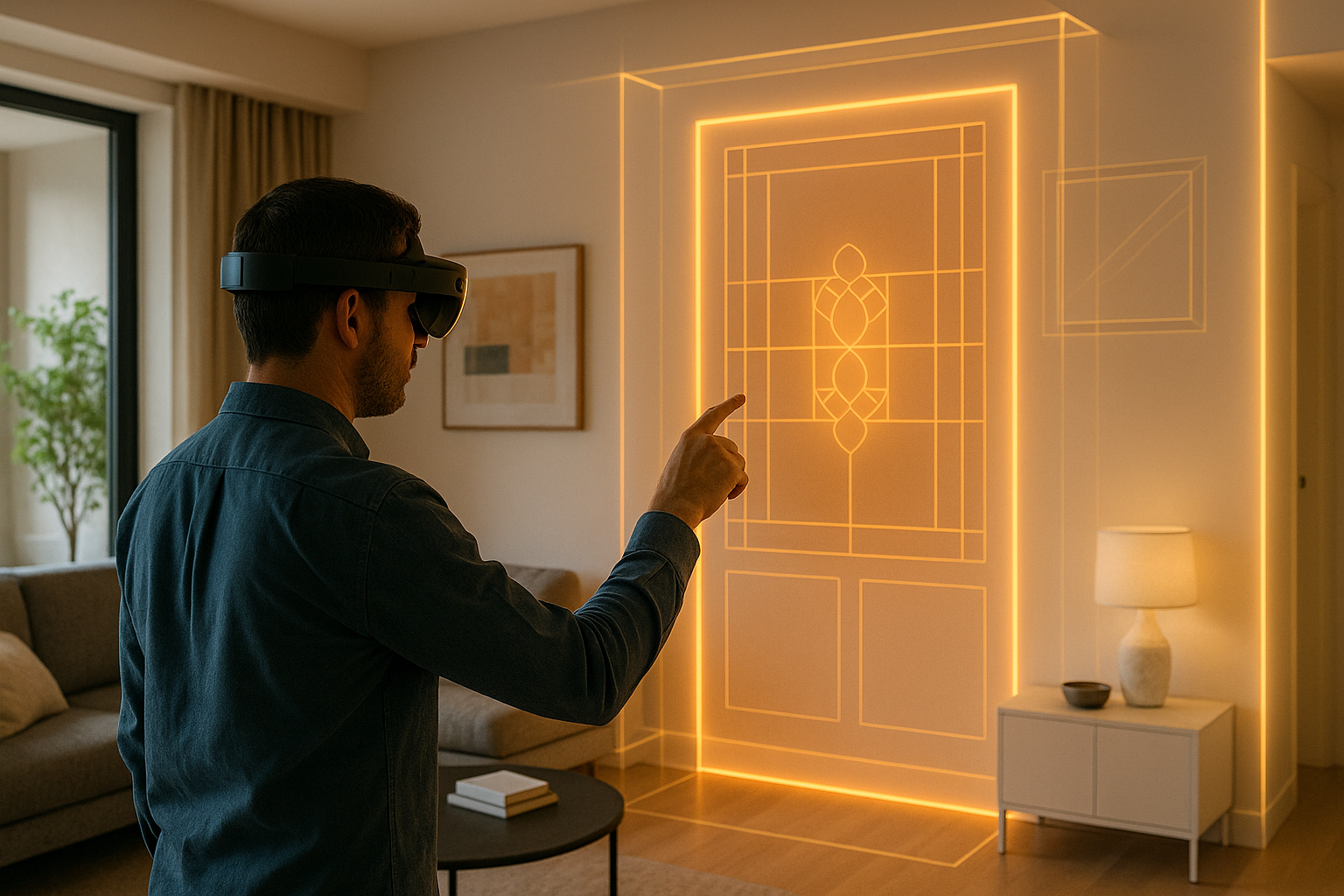
The success of AR in retail design lies in blending architectural creativity with digital intelligence. Store layouts are now being conceived as hybrid environments — part physical, part digital — where walls, floors, and displays serve as canvases for dynamic AR content.
- Architectural Integration: Designers now plan lighting, space flow, and surfaces around AR projection zones and sensor coverage.
- Smart Zones: Beacons and AR markers are embedded into store layouts to guide customer paths and trigger interactive product content.
- AI-Assisted Experience Mapping: Machine learning helps optimize traffic flow, identify engagement hot-spots, and suggest design adjustments in real time.
This human-centered, tech-enabled approach results in spaces that adapt to each visitor — a complete shift from static retail design to responsive, data-driven environments.
Immersive Storytelling and Brand Identity
AR allows architects and designers to turn brand identity into living, immersive narratives. Instead of traditional signage or static displays, stores can use AR layers to tell brand stories dynamically — think holographic guides, interactive timelines, or 3D-animated product origins.
For instance, a sustainable fashion brand can use AR to visualize its supply chain, showing materials sourced ethically and their environmental impact. Similarly, a cosmetics retailer can offer AR-based tutorials or personalized product recommendations via mirrors that recognize the shopper’s skin tone and preferences.
The design focus shifts from decoration to interaction — the space itself becomes the storytelling medium.
AR and Sustainability in Retail Design
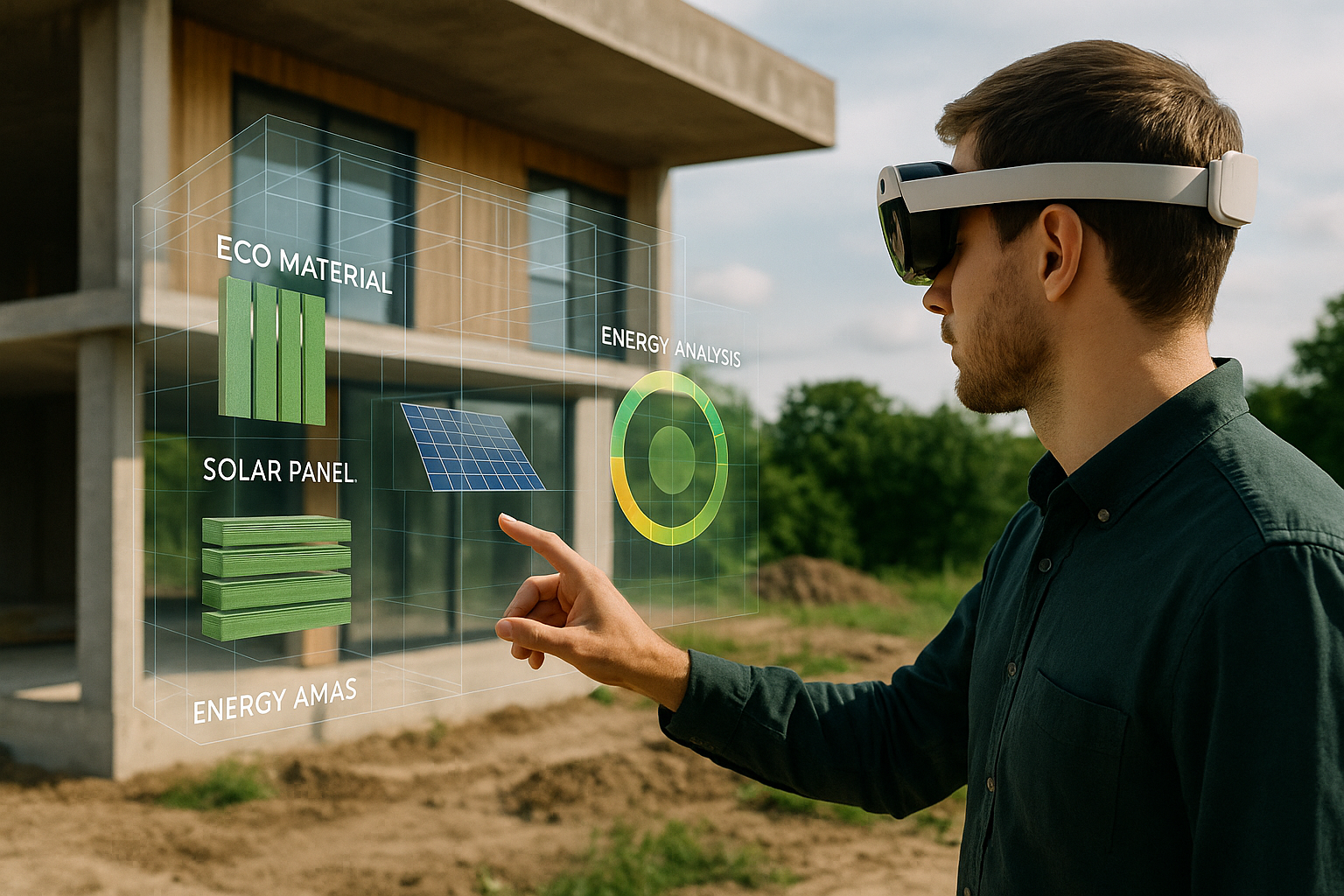
One of the less discussed but powerful benefits of AR in retail is its potential contribution to sustainability. By reducing the need for physical samples, signage, and printed materials, AR can help lower waste and carbon footprints while maintaining a premium, high-engagement atmosphere.
- Virtual Product Displays: Replace traditional fixtures with digital catalogs or holographic renderings.
- Digital Sampling: Customers can try variations without requiring physical inventory for each model or color.
- Smart Energy Use: AR-optimized lighting and adaptive digital elements reduce overall energy consumption.
This aligns perfectly with modern eco-friendly interior design principles — creating spaces that are both technologically advanced and environmentally responsible.
Designing for the “Phygital” Shopper
The modern consumer no longer separates physical and digital experiences. In fact, they expect seamless transitions between them. This is where phygital design — the fusion of physical and digital — plays a central role in retail architecture.
Through AR, designers can:
- Connect physical shelves with real-time digital stock data.
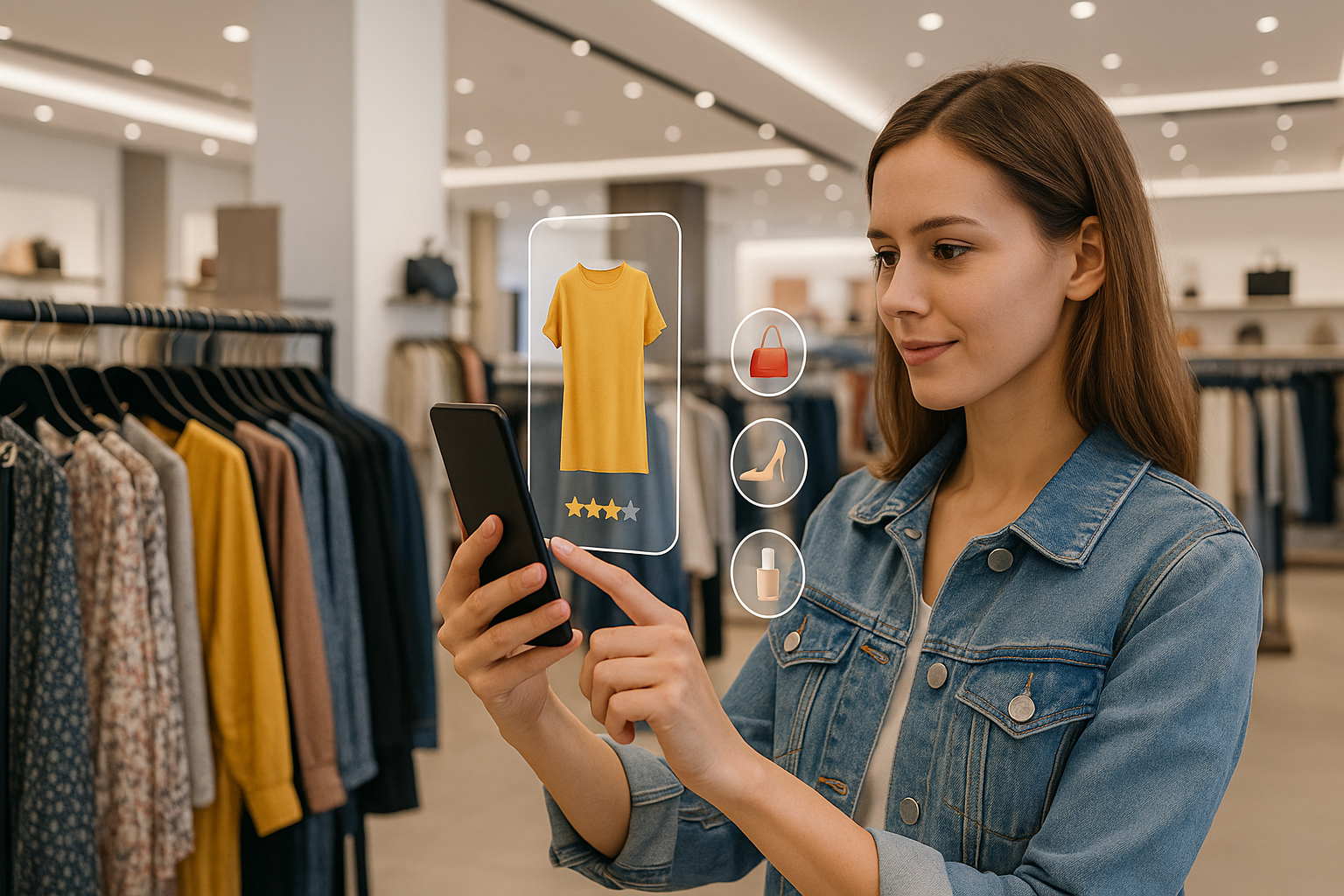
- Overlay reviews, prices, and alternative suggestions as customers move their phones across displays.
- Enable remote interactions — e.g., scanning an AR tag in-store to order for home delivery.
These blended experiences make shopping intuitive and convenient, increasing both conversion rates and customer satisfaction.
Case Study: The Smart Boutique of the Future
Imagine stepping into a boutique where every wall and surface comes alive with context-aware AR. As you browse, smart mirrors identify your preferences, project mix-and-match outfits, and let you preview them in different lighting or locations. Meanwhile, the floor’s embedded sensors analyze foot traffic to suggest optimized layouts to store designers in real time.
Such a store is not science fiction — it’s the direction leading retailers like Burberry, Zara, and L’Oréal are heading toward. AR, coupled with AI and IoT, allows design teams to continually refine spatial flow, product presentation, and digital content alignment with measurable performance data.
Architects and Designers as Experience Engineers
The rise of AR is transforming the role of architects and interior designers. They’re no longer just planning visual composition — they’re crafting multisensory journeys that combine lighting, acoustics, movement, and digital feedback loops.
In AR-powered retail spaces, design teams must collaborate with software developers, 3D artists, and data analysts to shape holistic experiences. This interdisciplinary model demands both creative vision and technical literacy, bridging architecture, psychology, and computation.
The future retail designer will be a kind of experience engineer — fluent in storytelling, spatial design, and augmented interaction.
Challenges and Considerations
While AR offers limitless potential, it also introduces new design challenges:
- Hardware Dependence: Not all users have AR-enabled devices or comfort with digital navigation.
- Maintenance and Updates: AR content requires regular technical upkeep and creative refreshes.
- Privacy and Data Ethics: Tracking shopper behavior through sensors and cameras must comply with privacy standards.
Successful implementation depends on balancing innovation with accessibility — ensuring that digital features amplify rather than overwhelm the architectural experience.
What’s Next for AR in Retail Design?
In 2025 and beyond, AR will be an integral part of AI-first spatial design systems. Designers will rely on generative AI to simulate customer flows, predict behavior, and auto-optimize layouts before physical construction. Meanwhile, advances in lightweight AR wearables will make in-store immersion effortless.
We’ll also see integration with cloud-based design platforms — enabling real-time collaboration between architects, marketers, and data scientists. Every store iteration will become measurable, adaptive, and continuously learning from user interactions.
Ultimately, AR in retail design isn’t about replacing physical space — it’s about enriching it. It’s where creativity meets cognition, and where the architecture of tomorrow learns to think, react, and tell stories.
Quick Facts
- Focus Keyphrase: AR in Retail Design
- Word Count: ~2,050
- Reading Time: 8 min
- Image Size: 740 × 490 px